


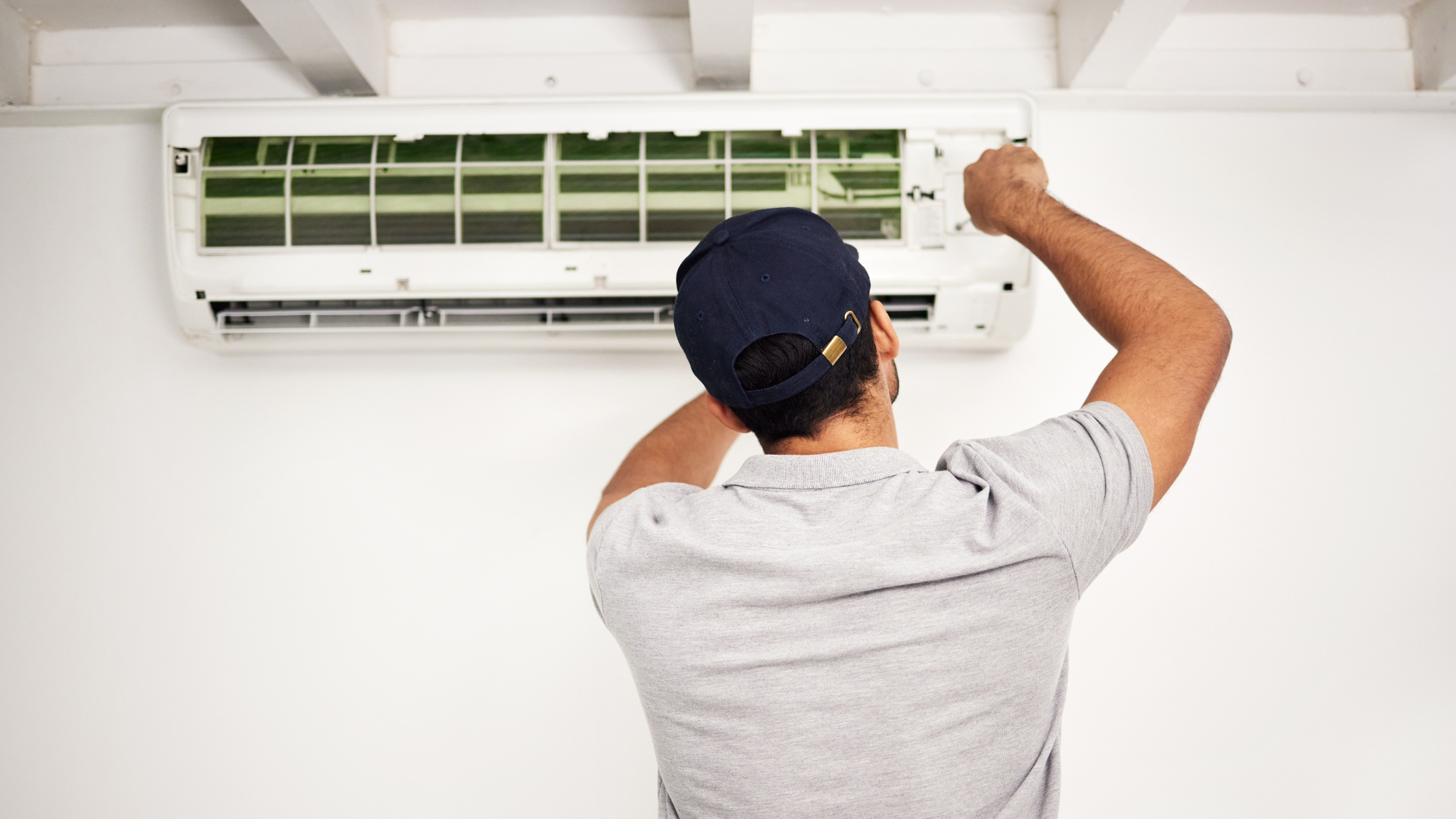
There’s never a good time for your AC to break down. But the absolute worst time is the first real heat wave of summer, when it’s 95 degrees and humid in Fairfax County and every HVAC company in Northern Virginia is swamped with emergency calls. Here’s the thing: most air conditioner failures don’t happen without warning. Your system usually gives you clear signals something’s wrong well before it stops working completely. Learn to recognize those signals now, and you’ll have a much smoother summer.
This guide covers the 5 signs your air conditioner needs repair, what each one usually means, what you can fix yourself, when to call a pro, and what common repairs typically cost. There’s also a simple maintenance checklist at the end so you can keep your system running strong all season long.
5 Signs Your Air Conditioner Needs Repair
Sign 1: Weak Airflow or Reduced Cooling Power
One of the earliest warning signs is when your AC seems to be running, but the house isn’t getting cool the way it used to. Maybe certain rooms feel stuffy. Maybe the air from the vents feels weak. Maybe the system runs all day but never quite hits the temperature you set.
What’s likely going on:
- Start with the simplest thing first: check your air filter. A filter clogged with dust and pet hair restricts airflow and makes your system work harder while delivering less cooling. If you haven’t changed it in the past month or two, that might be your entire problem. A clean filter takes two minutes to swap and costs a few dollars.
- If the filter is fine, the issue could be leaky or blocked ductwork. Ducts can develop gaps or disconnections over time, especially in older homes around Vienna and Arlington. Conditioned air escapes into wall cavities or the attic instead of reaching your rooms. You pay to cool air that never reaches you.
- A failing blower motor or capacitor is another common cause. The capacitor is the small component that gives the motor a boost to start up. Think of it like a battery for the motor. When it weakens, airflow drops noticeably. A capacitor replacement typically runs between $100 and $300, parts and labor included, and it’s one of the more affordable fixes on this list.
- Low refrigerant from a slow leak is another possibility. Refrigerant is the fluid that absorbs heat from your indoor air and moves it outside. If there’s not enough of it, the system can’t cool effectively. You’ll notice your home never quite reaches the set temperature no matter how long the system runs.
Why you shouldn’t wait: The longer a struggling system runs, the more wear it puts on every component. A $150 repair today can prevent a $1,500 compressor failure later.
Sign 2: Strange Noises Coming from Your System
A well-functioning AC should run quietly. You’ll hear a gentle hum and airflow through the vents. That’s it. Any sound that’s new, sharp, or loud deserves attention.
Sounds and what they typically mean:
- Grinding or screeching usually points to a motor bearing problem. When bearings wear out, metal rubs against metal. This gets worse over time and can destroy the motor if ignored.
- Banging or clanking means something is loose or broken inside the unit. A damaged fan blade or loose mounting bracket rattling around can cause damage to neighboring components quickly.
- Hissing or bubbling is often a refrigerant leak. Refrigerant escaping under pressure produces a hissing sound. Bubbling can mean air has entered the refrigerant lines.
- Clicking continuously throughout a cycle (not just at startup) often points to an electrical issue, such as a failing relay or capacitor.
- Squealing at startup typically means a worn belt or bearing that needs service before it fails completely.
The honest truth about waiting: A sound that’s minor today tends to become a breakdown tomorrow. Loose parts damage other parts. Worn bearings seize up motors. The noise is your system asking for help before the damage gets worse.
Sign 3: Unpleasant Odors When the System Runs
Your AC should blow cool, neutral air. If there’s a smell, something in the system needs attention.
What the odors usually mean:
A musty or moldy smell is one of the most common complaints we hear, especially in spring. Virginia’s humid weather makes it easy for moisture to get trapped inside the system, and when it does, mold and mildew can grow on the evaporator coil, in the drain pan, or inside the ductwork. Beyond being unpleasant, this circulates mold spores through your home and affects air quality, which matters especially for anyone with allergies or asthma.
- A burning or electrical smell should never be ignored. This can mean overheating wiring, a failing motor, or a component that’s about to give out. Turn the system off and call a technician. This is not a wait-and-see situation.
- A sweet or chemical smell often means a refrigerant leak. Refrigerant has a faint chemical odor. Prolonged exposure isn’t something you want, and the leak means your system is losing its ability to cool properly.
- A rotten smell could mean a small animal got into the ductwork, which does happen, or a clog in the condensate drain line.
Note: Don’t mask these smells with air fresheners. Covering up an odor doesn’t fix what’s causing it. Address the root problem.
Sign 4: Moisture or Leaks Around Your Unit
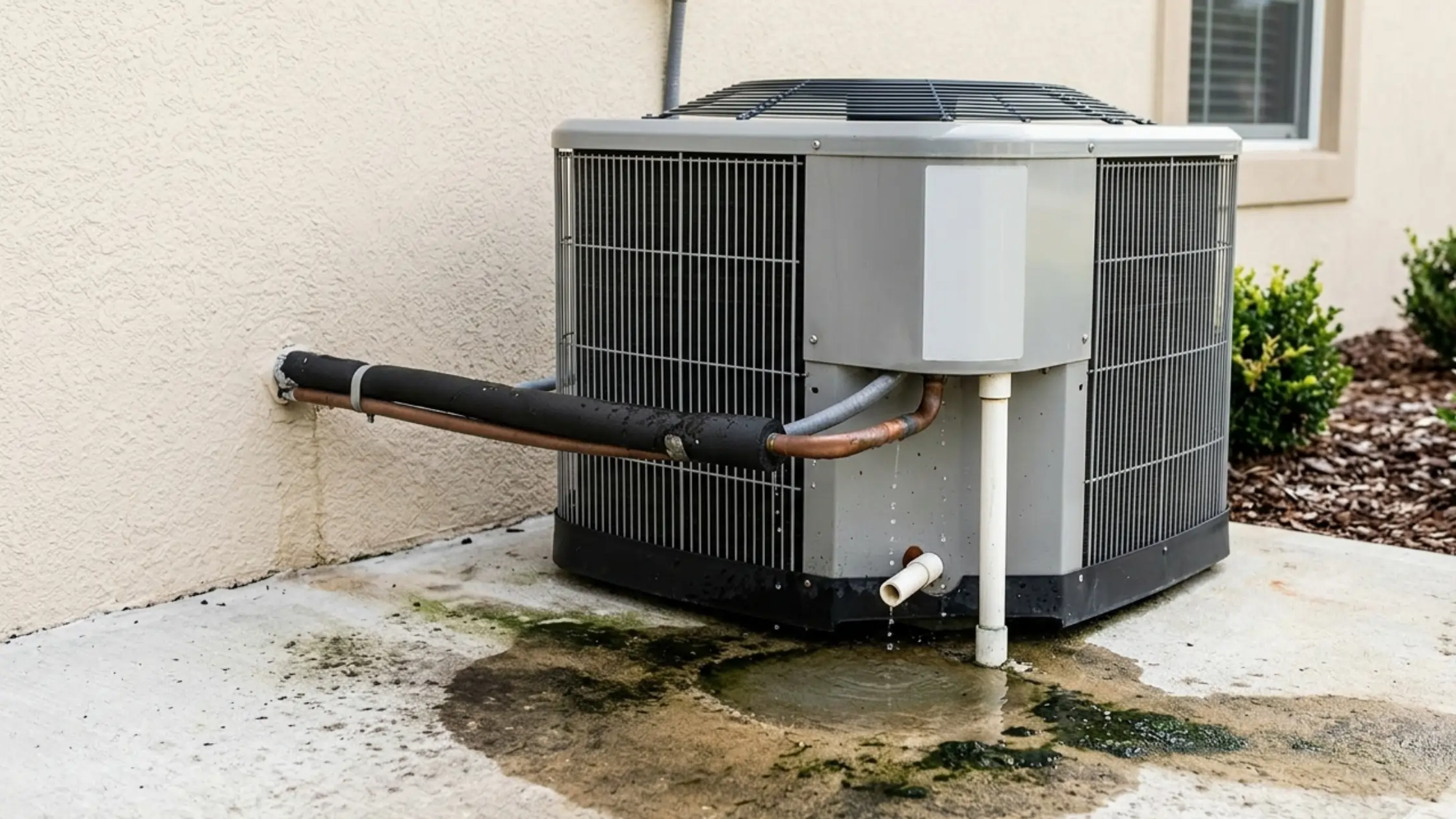
Some moisture near your AC is normal. Water that pools, drips indoors, or forms ice anywhere on the system is not.
What normal looks like: A small drip from the outdoor condensate drain pipe during humid weather is expected. Your system removes moisture from your indoor air and that water has to drain somewhere. A controlled trickle from the drain pipe is fine.
What isn’t normal:
- Water pooling around your indoor air handler usually means the condensate drain line is clogged. Algae, dust, and debris can block this line, causing water to back up and overflow the drain pan. Left unchecked, this can cause ceiling stains, damaged drywall, and mold growth inside wall cavities.
- Ice forming on the refrigerant lines or evaporator coil means either the airflow is restricted (dirty coil or clogged filter) or refrigerant is low. An iced-up system can’t cool your home and may cause compressor damage if you keep running it. Turn it off and call for service.
- Oily residue or frost on refrigerant lines outside means those lines are leaking. Refrigerant lines in a healthy system should always be dry. Any moisture or oily film on them is a sign of a leak.
Repair cost to expect: Clearing a clogged condensate drain line typically runs $75 to $200. A refrigerant recharge (adding refrigerant after a confirmed leak and repair) generally costs $200 to $500 depending on the refrigerant type and how much is needed.
Sign 5: Frequent Cycling or Difficulty Starting
Your system should run in steady cycles, cooling your home down to the set temperature, then turning off until it’s needed again. On a hot Virginia day, that might mean 15 to 20 minute cycles a few times per hour.
Short cycling is when the system turns on, runs for just two or three minutes, and then shuts off again before your home cools down. It starts up again shortly after. This cycle repeats constantly.
What causes it:
- A dirty or frozen evaporator coil can trigger safety switches that shut the system down to prevent compressor damage.
- A failing capacitor makes the system hard to start. You may hear clicking as it tries to kick on.
- Low refrigerant causes pressure problems inside the system, which leads to premature shutoff.
- A thermostat that’s miscalibrated, or placed near a heat source like a sunny window or a lamp, reads the wrong temperature and sends incorrect signals to the system.
- An oversized system will cool the space too fast and shut off before it finishes removing humidity, leaving your home cool but clammy. This is a design issue, not a repair issue, but it’s worth knowing for when you eventually replace the unit.
Why this matters most: Short cycling is extremely hard on the compressor. Each startup creates a surge of stress on the motor and electrical components. Systems that cycle constantly wear out years earlier than they should. They also never properly dehumidify your home, which makes Virginia summers feel much worse than they need to.
Your Preventive Maintenance Checklist
These are the basic tasks any homeowner can handle. None of them require tools or special training. Doing them consistently can extend your system’s life by years and keep your energy bills in check.
Every 1 to 2 months:
Replace the air filter. If you have pets or allergies, change it monthly. This single habit prevents more AC problems than any other maintenance task.
At the start of cooling season (April or May is ideal in Northern Virginia):
Test the thermostat by setting it 5 degrees below room temperature and waiting for the system to kick on. If it doesn’t respond, you may need a battery replacement or thermostat service.
Clear debris from around the outdoor condenser unit. Leaves, grass clippings, and overgrown plants can reduce airflow. Keep at least 2 feet of clear space around the unit on all sides.
Gently rinse the outdoor coil fins with a garden hose on low pressure to remove dirt and dust buildup.
Check the condensate drain line. Pour a cup of diluted white vinegar down the drain opening near your indoor air handler. This kills algae before it can form a clog.
Look at the insulation on the refrigerant lines running from your outdoor unit to the house. If the foam insulation is cracked or missing, tape it or replace it. Exposed lines waste energy.
Once a year:
- Schedule a professional tune-up in spring, before the heat arrives. A technician will check refrigerant levels, inspect the electrical components, clean the coils thoroughly, test the capacitor, and confirm the system is operating efficiently. This is the single best investment you can make in your AC’s longevity.
What You Can Fix Yourself vs. When to Call a Pro
It’s worth being clear about where the line is, because crossing it can make things worse or create a safety hazard.
Safe DIY tasks:
• Replacing the air filter.
• Clearing debris from around the outdoor unit.
• Rinsing the outdoor coil fins with a garden hose.
• Pouring vinegar down the condensate drain.
• Replacing thermostat batteries.
• Resetting your circuit breaker if the system tripped it once.
Always call a licensed technician for:
• Anything involving refrigerant. Handling refrigerant is regulated by the EPA and requires Section 608 certification. It’s not legal for unlicensed individuals to purchase or handle it.
• Any electrical work inside the unit, including capacitors, contactors, or wiring.
• Compressor issues.
• Frozen evaporator coils that don’t resolve after thawing and filter replacement.
• Persistent water leaks indoors.
• Any burning smell or electrical odor.
If you’re not sure which category your situation falls into, a quick call to a licensed technician is always the right move. A real pro will tell you honestly whether it’s something you can handle or something that needs a service visit.
What Common AC Repairs Actually Cost
Here are honest estimates for Northern Virginia. Prices can vary depending on the age of your system, the brand, and parts availability.
• Air filter replacement: $5 to $30 (DIY).
• Condensate drain cleaning: $75 to $200.
• Thermostat replacement: $150 to $400, including labor.
• Capacitor replacement: $100 to $300.
• Evaporator coil cleaning: $100 to $400.
• Refrigerant recharge (after leak repair): $200 to $500.
• Blower motor replacement: $300 to $700.
• Evaporator coil replacement: $700 to $1,500.
• Compressor replacement: $1,200 to $2,800.
The pattern is clear: catching problems early costs significantly less than waiting for a full failure. A $150 capacitor replacement today prevents a $2,000 compressor job later. You need to choose HVAC contractor carefully, when you need to repair AC.
How to Save on Energy Bills While You’re at It
A system that’s running well uses less electricity. But there are a few additional steps that make a real difference on your Dominion Energy bill.
- Seal your ducts. Leaky ducts can waste 20 to 30 percent of your cooled air. If certain rooms are always warmer than others, duct sealing is worth investigating. A technician can pressure-test your duct system and seal any gaps.
- Use a programmable or smart thermostat. Raising the temperature by 7 to 10 degrees while you’re at work for 8 hours can cut your cooling costs noticeably. A smart thermostat does this automatically and can be adjusted from your phone.
- Don’t block your vents. Furniture pushed against supply or return vents restricts airflow and makes the system work harder. Walk through your rooms and check that nothing is blocking vents.
- Check your attic insulation. In the summer sun, an under-insulated attic acts like a heat lamp sitting above your home. If your attic has less than R-38 insulation (which is recommended for the Northern Virginia climate zone), heat is pushing through your ceiling constantly. Improving attic insulation reduces the load on your AC more than almost any other home improvement.
Know When It’s Time to Replace, Not Repair
Most AC systems last 12 to 15 years with proper maintenance. At that age, the calculus on repair vs. replace starts to shift.
Here’s a simple way to think about it. Multiply your repair estimate by the age of your system. If the result is more than half the cost of a new system, replacement is usually the smarter financial decision.
For example: a $700 repair on a 14-year-old system. A new system installed costs roughly $5,000 to $8,000. $700 x 14 = $9,800, which is more than the replacement cost. That’s a strong signal it’s time to replace.
Other signs that replacement makes more sense than repair:
• Your system uses R-22 refrigerant (also called Freon). This refrigerant is no longer manufactured, which makes recharges very expensive.
• You’ve had multiple repairs in the past two or three years.
• Your energy bills have been steadily climbing even though you’re not using the system more.
• The indoor air handler and outdoor unit are mismatched models more than a few years apart in age.
A newer system with a SEER rating of 16 or higher will use meaningfully less electricity than an aging 10 or 12 SEER unit. In many cases, the monthly energy savings start to offset the replacement cost within a few years.
Don’t Head into Summer Without Doing This

Before the first 90-degree day hits Northern Virginia, take 20 minutes to walk through your system. Check the filter. Clear the outdoor unit. Pour vinegar down the drain. Test the thermostat. Listen for anything that sounds off.
If you notice any of the warning signs covered in this article, schedule a service visit before the heat arrives. Pre-season appointments are easier to book, typically less expensive, and give you the peace of mind of knowing your system is ready.
Golden Arrow Service team is available for inspections and tune-ups right now, before the summer rush. Call us at 703-782-5028 or reach out to get on the schedule to repair your AC.
Frequently Asked Questions
1. My system is 11 years old and just passed its annual tune-up with no issues. Should I start saving for a replacement now anyway?
Yes, it’s a smart move. A system that passes a tune-up today is in good shape, but parts start failing more frequently after the 12 to 15 year mark regardless of maintenance. Starting a dedicated savings fund now means you won’t be caught unprepared when the time comes. It also gives you the option to replace on your schedule rather than in a panic during a July heat wave, when installation crews are booked out and prices sometimes reflect that demand.
2. Can a dirty air filter actually cause ice to form on my AC?
It can, and this is more common than most people realize. The evaporator coil needs a steady flow of warm air passing over it to work correctly. When a clogged filter restricts that airflow, the coil gets too cold and frost starts to form on it. If the system keeps running, that frost builds into a solid block of ice. At that point, the AC can’t cool at all and you risk damaging the compressor. The fix is to turn the system off, let it thaw completely (which can take a few hours), replace the filter, and then restart. If it freezes again after that, the issue is low refrigerant and you’ll need a technician.
3. My outdoor unit makes a loud noise when it shuts off, like a clank or thud. Is that normal?
A single clunk at shutdown is usually just the compressor stopping and the refrigerant pressure equalizing. That’s normal. What’s not normal is a loud bang, a grinding noise that continues for several seconds after shutdown, or any noise that’s gotten louder over time. If the shutdown noise has changed recently or started happening where it didn’t before, mention it at your next service visit so a tech can listen and confirm nothing is loose.
4. How does Virginia’s humidity specifically affect my AC’s performance?
Your AC does two jobs at once: it lowers the air temperature and it removes moisture from the air. In Northern Virginia’s humid summers, the moisture removal side of that equation is doing heavy lifting from June through September. A system that’s oversized for your home will cool the air temperature quickly but then shut off before it runs long enough to pull adequate moisture out. The result is a home that reads 74 degrees on the thermostat but still feels sticky and uncomfortable. Proper system sizing, combined with good insulation and sealed ductwork, is what allows your AC to manage both temperature and humidity well.
5. Is it worth adding an air purifier or UV light to an existing AC system?
For most homeowners, yes, especially if anyone in the house has allergies, asthma, or respiratory sensitivities. UV germicidal lights are installed inside the air handler and kill mold, bacteria, and some viruses that pass through the system. They’re particularly useful for preventing the mold growth on the evaporator coil that causes that musty smell many homeowners notice in spring. A whole-home HEPA filtration upgrade or media filter can reduce allergens, dust, and fine particles significantly more than a standard 1-inch filter. These additions don’t change how your system heats or cools, but they do meaningfully improve what the air feels like to breathe.
6. My neighbor just got a new AC and says his old refrigerant type is making repairs unaffordable. What should I know about this?
This is about R-22 refrigerant, which was the standard for most systems installed before 2010. R-22 is no longer manufactured in the US due to environmental regulations, which means the remaining supply is limited and prices have shot up sharply. If your system uses R-22 and develops a refrigerant leak, a recharge can cost $600 or more, and the cost keeps rising. If your system is over 15 years old and still on R-22, factor that into your repair vs. replace decision. Newer systems use R-410A or R-32, which are more affordable, more efficient, and still in full production. When in doubt, your service technician can check which refrigerant your system uses.

