


Your HVAC system is one of the hardest-working parts of your home. It keeps your family cool through a Virginia summer that can hit 95 degrees and humid, and it keeps everyone warm when January temperatures drop into the low 20s overnight. When it’s time to replace or upgrade, the number of options can feel overwhelming fast.
This guide walks you through the whole process in plain terms, no jargon walls, no pressure. By the end, you’ll know what questions to ask, what numbers to pay attention to, and what actually makes a difference in a home like yours, and help you choosing the right HVAC system for your home.
Key Takeaways
• Size Matters More Than You Think: Learn why a system that is “too powerful” is actually worse for your comfort and your wallet than one that is correctly sized.
• The “Manual J” Secret: Discover the industry-standard math formula that professional contractors use to prevent short-cycling and high humidity.
• The Virginia Humidity Factor: Find out why cooling your air isn’t enough—your system has to “squeeze” the water out of the air to keep you truly comfortable.
• Hybrid Solutions: See why many locals are switching to “dual-fuel” systems to survive $20 nights without breaking the bank.
• The Hidden Cost of Ducts: Why spending $8,000 on a new unit might be a waste of money if you don’t check your “pipes” first.
Start Here: What Your Home Actually Needs before Choosing the Right HVAC System
Before you look at a single system, you need to understand your home first. Choosing the right HVAC system without this step is like buying shoes without knowing your size. It might sort of work, but it probably won’t fit right.
Home Size and Layout
The size of your home determines how much heating and cooling power you actually need. That capacity is measured in tons. One ton of cooling means the system can remove 12,000 BTUs (British Thermal Units, basically a measure of heat energy) per hour.
Here’s a rough sizing guide for homes in the Northern Virginia area:
• 1,000 to 1,500 sq. ft.: typically a 2 to 2.5 ton system.
•1,500 to 2,000 sq. ft.: typically a 3 to 3.5 ton system.
• 2,000 to 2,500 sq. ft.: typically a 4 to 5 ton system.
These are starting points only. Your home’s layout matters just as much as its size. A single-story ranch with an open floor plan distributes air very differently from a 3-story townhouse in Arlington with rooms on every level. Multi-story homes often need zoning, which means the system is set up to heat or cool different floors independently instead of treating the whole house as one space.
Ceiling Height, Windows, and Insulation
Rooms with tall ceilings hold more air, so they take more energy to condition. Large windows, especially south-facing ones, let in a lot of heat in summer. Drafty windows and doors let conditioned air escape year-round.
If your insulation is thin or old, your system ends up working a lot harder than it should. This is worth fixing before you buy a new system. Better insulation means you can buy a less powerful system and still stay comfortable. That saves money on day one and every month after.
The Manual J Load Calculation
Here’s something a lot of homeowners don’t know: a good HVAC contractor won’t just look at your square footage and pick a system. They’ll perform what’s called a Manual J Load Calculation. This is an industry-standard formula that accounts for your home’s square footage, insulation levels, window placement, sun exposure, ceiling heights, and how many people live there.
The result tells you the exact heating and cooling load your home needs. It prevents two common and costly mistakes: buying a system that’s too small (it’ll run constantly and never keep up) and buying one that’s too big (it short-cycles, meaning it turns on and off too fast, wastes energy, and never properly removes humidity from the air).
The Northern Virginia Climate Factor
This matters more than most guides will tell you. Northern Virginia has a genuinely demanding climate for HVAC systems. Summers in Fairfax County are hot and humid. It’s not dry Arizona heat. It’s that sticky, draining humidity that makes 88 degrees feel like 100. Your cooling system has to handle both the heat and the moisture removal.
Winters here are real winters, too. We’re not talking about mild mid-Atlantic temperatures the whole season. January nights in Vienna regularly drop into the 20s, and the occasional ice storm or hard freeze means your heating system needs to be reliable, not just adequate.
This dual demand, strong summer cooling plus dependable winter heating, is the key reason system selection matters so much in this region. A heat pump that works well in a mild climate might struggle during a cold snap in Northern Virginia. We’ll talk about that in more detail below.
Types of HVAC Systems: What’s Actually Available
There are four main types of residential systems. Here’s what each one does, who it’s best for, and what to watch out for.
Split Systems: The Most Common Setup
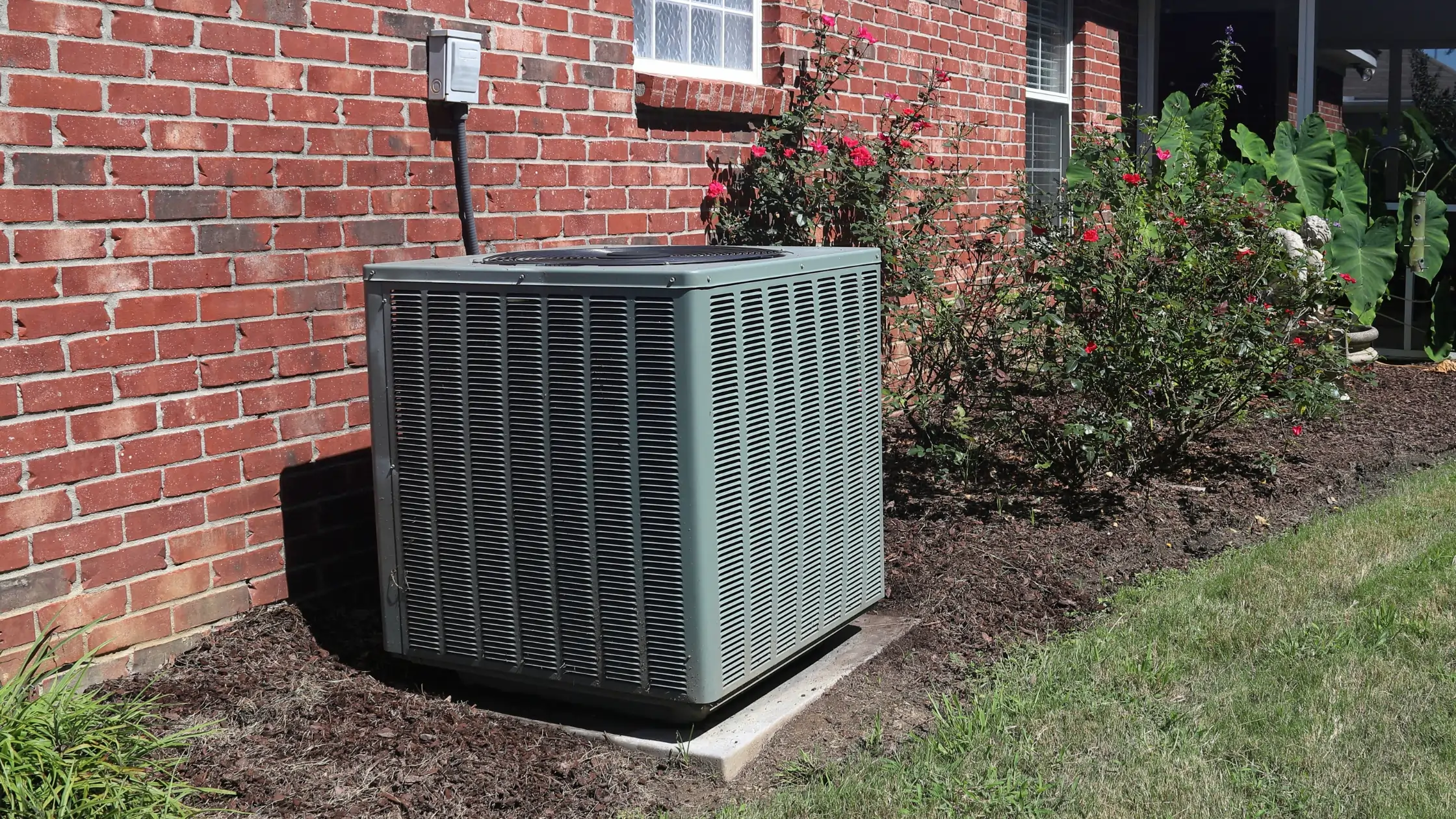
A split system is what most homes in the area already have. It’s called “split” because the system has two separate units. One is outside (this is the condenser unit, the box with the fan that you’ve probably seen in backyards), and one is inside (the air handler or furnace). The two are connected by refrigerant lines and ductwork that runs through the house.
In cooling mode, the system pulls heat from inside your home and moves it outside. In heating mode, a furnace inside burns gas to heat air, and the blower pushes that warm air through your ducts.
This setup is reliable, well understood, and compatible with the ductwork already in most Fairfax County homes. It’s the most common starting point for replacements.
Best for: Homes with existing ductwork that need a like-for-like replacement or a reliable upgrade.
Watch out for: Duct condition. If your ducts are old, leaky, or poorly designed, a new split system will still underperform. Leaky ducts can cut system efficiency by up to 30 percent. It’s worth having them inspected before you install anything new.
Heat Pumps: Efficient, With One Important Caveat
A heat pump doesn’t generate heat. Instead, it moves heat from one place to another. In summer, it pulls heat out of your house and moves it outside, just like a standard AC. In winter, it reverses, pulling heat from the outside air and moving it inside.
That might sound strange. Even cold air contains heat energy, and a heat pump can extract it. This makes heat pumps highly efficient. They use electricity, but because they move heat rather than generate it, they can deliver two to four times as much heating energy as the electricity they consume. Compare that to a traditional electric furnace, which delivers about one unit of heat per unit of electricity used.
Here’s the caveat for Northern Virginia. Standard air-source heat pumps lose efficiency as outdoor temperatures drop. Below around 35 degrees, they have to work harder. Most modern heat pumps have an electric backup heating strip that kicks in during very cold weather, but that’s essentially an electric furnace, which is less efficient.
The solution many homeowners here choose is a dual-fuel or hybrid system. This pairs a heat pump with a gas furnace as a backup. The heat pump handles most days efficiently, and the furnace takes over during the coldest nights. It’s a smart combination for this climate.
Best for: Homeowners who want lower utility bills and are replacing both heating and cooling at once. Especially good if you already have natural gas and are considering a dual-fuel setup.
Watch out for: Make sure any heat pump you buy has a high enough HSPF rating (explained below) to handle cold winters, or pair it with a gas backup.
Ductless Mini-Splits: The Best Option When Ducts Aren’t an Option
A ductless mini-split has the same basic idea as a split system, one outdoor unit connected to one or more indoor units. The difference is that there is no ductwork. Each indoor unit mounts on the wall or ceiling of a specific room and conditions just that space.
This is the go-to option for home additions, converted garages, sunrooms, finished basements, or any space that’s hard to reach with ductwork. It’s also a solid choice for older homes in Arlington or Alexandria that were built before central air was standard.
Each indoor unit can be controlled independently, so you’re only heating or cooling the rooms you’re actually using. That zoning capability can significantly reduce energy waste.
Best for: Rooms or additions without ductwork, homes where installing ducts would be too invasive or expensive, or situations where you want very precise room-by-room control.
Watch out for: The upfront cost per unit is higher than that of a traditional split system. If you need to condition your whole house this way, the total cost adds up quickly.
Packaged Units: Everything in One Box Outside
A packaged system puts the heating and cooling components into a single unit installed outdoors, usually on a rooftop or on a concrete pad beside the home. It connects directly to your home’s ductwork. There’s no separate indoor unit.
This setup makes sense when indoor space is limited. You’ll see it more often in townhomes, condos, or homes with very small mechanical rooms. It’s a legitimate option, just less common than split systems in single-family homes.
Best for: Homes with limited indoor mechanical space.
Understanding Efficiency Ratings
When you’re comparing systems, you’ll see a lot of numbers. These three are the ones that actually matter for your wallet.
SEER: Cooling Efficiency
SEER stands for Seasonal Energy Efficiency Ratio. It measures how efficiently a system cools your home over a full season. The higher the number, the less electricity the system uses to produce the same amount of cooling.
The federal minimum for new systems is 14 SEER in the Northern region. A 16 or 18 SEER system will cost more upfront but cuts your cooling bills noticeably over time. Systems above 20 SEER are available if you want maximum efficiency.
A good rule of thumb: a 16 SEER system uses about 13 percent less electricity than a 14 SEER system to produce the same cooling. Over years of Virginia summers, that adds up.
AFUE: Furnace Heating Efficiency
AFUE stands for Annual Fuel Utilization Efficiency. It’s the percentage of fuel your furnace actually converts into heat. A 90% AFUE furnace turns 90 cents of every dollar of gas into heat. The other 10 cents goes out the exhaust flue.
Older furnaces can drop to 60 to 70 percent AFUE as they age. Modern high-efficiency furnaces run at 95 to 98 percent AFUE. If you’ve had your furnace for 15 or more years, this efficiency gap is probably showing up on your gas bills every winter.
HSPF: Heat Pump Heating Efficiency
HSPF stands for Heating Seasonal Performance Factor. It measures how efficiently a heat pump heats your home. The higher the number, the better. Most modern heat pumps fall between 8 and 12 HSPF. For a Northern Virginia winter, you’ll want to stay toward the higher end of that range.
What to Check Before You Buy Anything
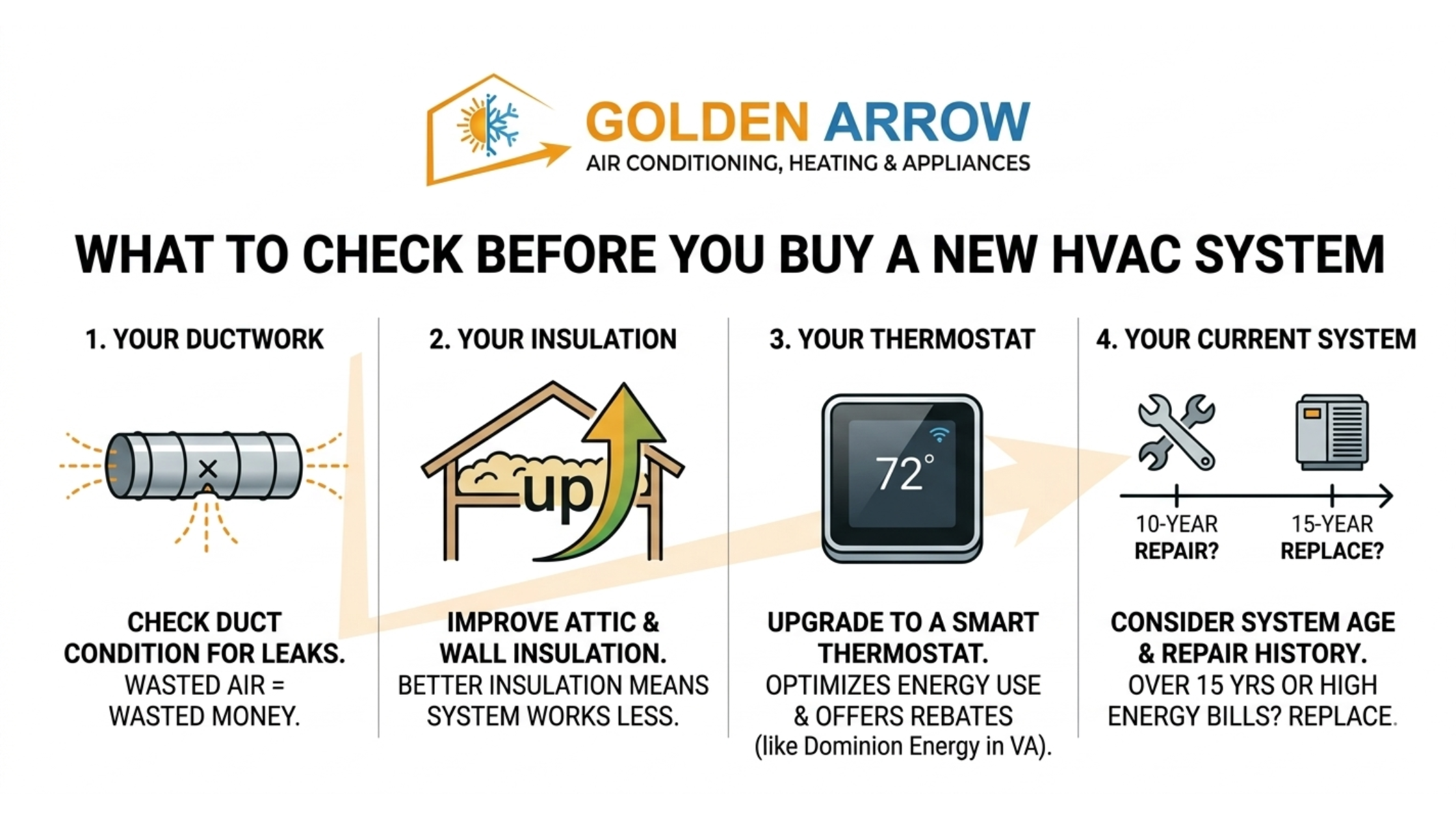
A new system won’t fix problems that exist outside the system itself. Here are four things worth looking at first.
Your Ductwork
Old or leaky ducts are one of the most common reasons a new system doesn’t perform as well as expected. If air is leaking out before it reaches the rooms you’re trying to condition, you’re wasting money regardless of how efficient the system is. Ask your technician to check duct condition before installation.
Your Insulation
As mentioned earlier, better insulation means your system works less. If you’re replacing a system that’s been running constantly just to keep up, check the insulation in your attic and walls before assuming you need a bigger system.
Your Thermostat
A new system paired with an old thermostat is a missed opportunity. A smart thermostat learns your schedule, adjusts automatically when you’re away, and can be controlled from your phone. Many programs, including Dominion Energy’s rebate programs in Virginia, offer rebates on smart thermostats that can offset the cost.
Your Current System’s Age and History
If your current system is under 10 years old and has had only minor issues, repair might make more sense than replacement. If it’s over 15 years old, has needed multiple repairs in recent years, or your energy bills have been climbing steadily, replacement is almost always the better financial decision at that point.
How to Prepare for Winter and Summer: Seasonal Tips
Whatever system you have, a little preparation each season goes a long way.
Before summer: Have your AC or heat pump’s cooling components serviced in April or May. A technician will check refrigerant levels, clean the coils, inspect the blower, and make sure the system is ready for the long hot months ahead. Replace your air filter at the start of the season too.
Before winter: Have your furnace or heat pump’s heating mode inspected in September or October. Burner inspection, heat exchanger check, and a test run before temperatures drop will catch anything that needs attention before you need the heat badly.
Year-round: Change your air filter every one to three months, depending on whether you have pets or anyone with allergies in the home. A clogged filter is one of the most common causes of reduced system performance and higher energy bills.
What the Outside Unit Is Called and Why It Matters
This comes up a lot. The unit sitting outside your house is called the condenser unit (for an AC or heat pump) or just the outdoor unit. It houses the compressor, the condenser coil, and the fan.
The compressor is the heart of the system. It pressurizes the refrigerant, which is what allows heat to be moved in or out of your home. When something goes wrong with the compressor, it’s usually the most expensive repair in the system. That’s one reason system age and maintenance history matter so much when deciding to repair vs. replace.
A Quick Look at Typical System Costs in Northern Virginia
These are general ranges. Actual costs depend on your home’s size, duct condition, system brand, and the complexity of the installation.
- Central AC replacement (existing ducts): $4,000 to $8,000
- Gas furnace replacement: $3,500 to $7,000
- Heat pump (full system): $5,000 to $10,000
- Ductless mini-split (single zone): $3,000 to $6,000
These numbers include equipment and installation. A Licensed contractor will give you a full quote that breaks down equipment, labor, and any additional work, such as duct repairs or permits. Virginia requires permits for HVAC installations in most cases, and licensed contractors handle that process for you.
How to Find the Right HVAC Contractor
The right system installed badly is still a problem. Here’s what to look for when you’re choosing who to hire:-
• Make sure they’re licensed in Virginia. HVAC contractors in Virginia are required to hold a Class A, B, or C contractor’s license through the Department of Professional and Occupational Regulation (DPOR). Ask for their license number.
• Check that they’re NATE-certified. NATE stands for North American Technician Excellence. It’s the main industry certification for HVAC technicians. A NATE-certified tech has passed exams proving they know their stuff.
• Ask if they do a Manual J load calculation before recommending a system. If a contractor recommends a system based purely on the size of your old one, without any real assessment, that’s a problem. Good contractors do the math.
• Get at least two or three quotes. This helps you understand what a fair price looks like and gives you a chance to compare what each contractor is actually proposing.
• Read local reviews. A contractor with a strong reputation in Vienna, Fairfax, or Arlington is someone your neighbors have already trusted. That’s worth a lot. Read more about choosing the right HVAC contractor.
Wrapping Up
Choosing the right HVAC system doesn’t have to be stressful. The basics are straightforward: know your home’s size and layout, understand your climate demands, compare system types honestly, check efficiency ratings, and work with a licensed contractor who does the job right from the start.
Northern Virginia’s climate puts a lot of strain on HVAC systems. Hot, humid summers and cold winters mean your system works hard in both directions. Getting the right fit makes a real difference in comfort, reliability, and what you pay on your energy bill every month.
If you’re ready to take the next step, our Golden Arrow Service team in Vienna, VA, is here to help. We’ve been doing this in this area for 25 years, and we’re happy to walk you through your options without any pressure. Give us a call at 703-782-5028 or reach out to schedule a free consultation.
Frequently Asked Questions
1. Can I install a ductless mini-split in just one room while keeping my existing central system for the rest of the house?
Yes, and this is actually a very common setup. Many homeowners in Northern Virginia add a mini-split to a finished basement, a sunroom, or a bonus room that the main ductwork doesn’t reach well. The two systems run independently and don’t interfere with each other. It’s a practical way to solve a comfort problem in one area without replacing your whole system.
2. Will a higher-SEER system actually pay for itself in Northern Virginia?
It depends on how much you cool your home and what you pay for electricity. In Northern Virginia, where summers are long, and Dominion Energy rates apply, upgrading from a 14 SEER to an 18 or 20 SEER system can genuinely shorten that payback period. A good contractor can run the math based on your actual usage and show you the estimated annual savings before you commit.
3. What happens if I don’t get permits for my HVAC installation?
In Virginia, unpermitted HVAC work can create real problems. It can void your homeowner’s insurance coverage for related claims, complicate a home sale when the buyer’s inspector finds it, and put you on the hook for fines if the work is discovered. A licensed contractor will automatically pull the required permits. If a contractor suggests skipping permits to save money, that’s a sign to look elsewhere.
4. My upstairs is always hotter than my downstairs in summer. Will a new system fix that?
Not automatically. Uneven temperatures between floors are usually caused by one of three things: an undersized system, leaky or unbalanced ductwork, or the natural physics of heat rising. A new system alone won’t solve it unless the root cause is addressed. Zoning controls or duct corrections are usually what actually fix the problem. A good technician will diagnose the real cause before recommending a solution.
5. Is it better to replace just the AC or the furnace, or both at the same time?
If one component is 15 or more years old and needs major repairs, it usually makes financial sense to replace both at the same time. Here’s why: the indoor and outdoor units of a split system are designed to work together. Mismatched components (a new outdoor unit paired with an old furnace or air handler) can reduce efficiency, cause compatibility issues, and sometimes void the warranty on the new equipment. If both units are near the end of their lifespan, replacing them together saves on labor and gives you a fresh start with matched, warranted equipment.
6. How does humidity affect how my HVAC system performs in Northern Virginia?
Quite a bit. Your air conditioner removes moisture from the air as part of the cooling process. When it’s running well and sized correctly, your indoor humidity should stay in the 40 to 50 percent range even during July and August. If your system is oversized and short-cycles (turns on and off quickly without running long enough), it cools the air quickly but doesn’t run long enough to remove moisture. The result is an air temperature that looks right on the thermostat but still feels clammy. This is one of the main reasons proper sizing matters so much, and it’s also why some homeowners add a whole-home dehumidifier as a separate layer of control during peak summer in Virginia.

