

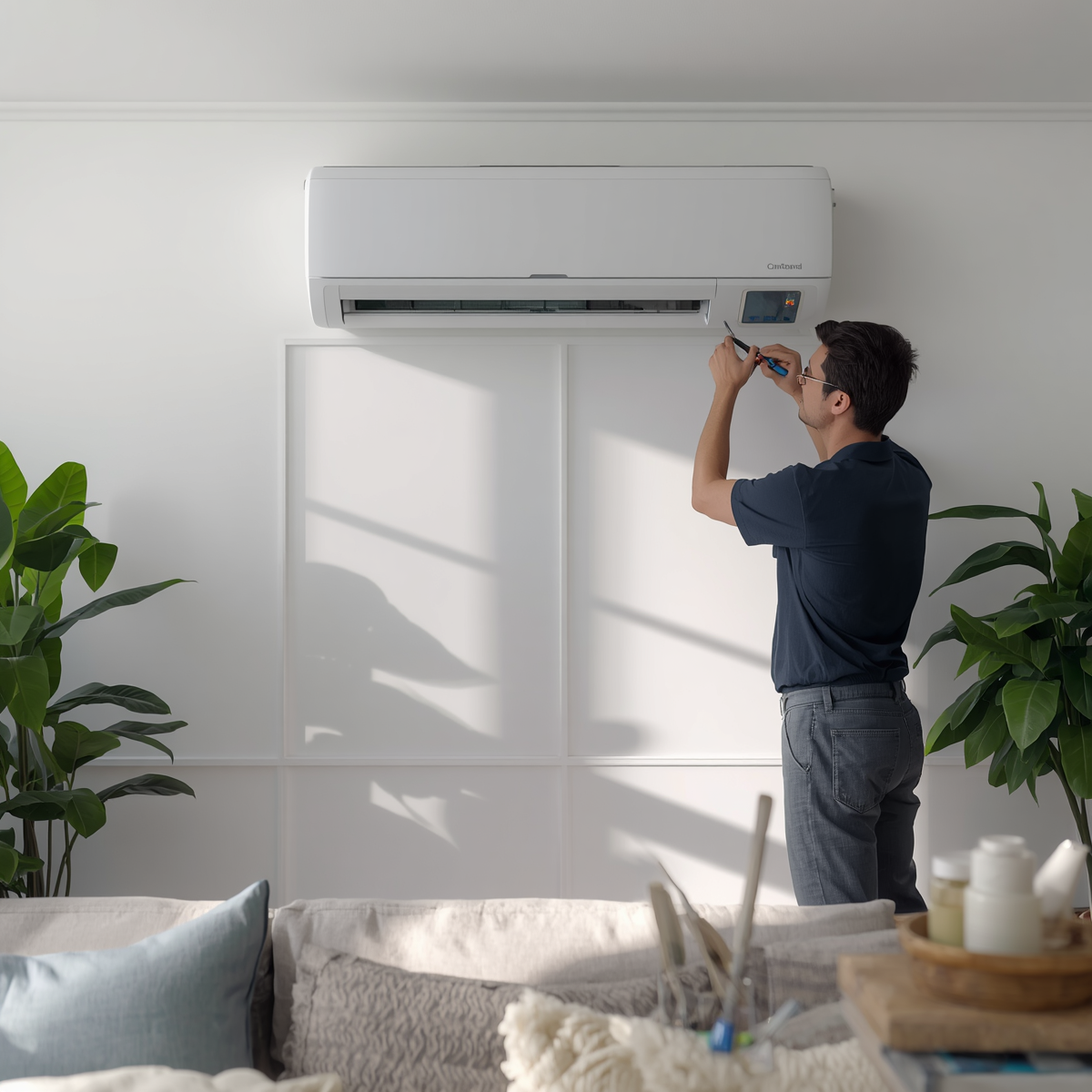
Why Your AC Turning On and Off?
If your AC turning on and off every few minutes, you’re not imagining it. That pattern has a name: AC short cycling. It’s one of the most common cooling system problems NOVA homeowners deal with during summer.
Short cycling wastes electricity, puts increased wear and tear on the compressor, and leaves your home feeling warm and sticky even when the system seems to be running constantly.
Why does my AC keep turning on and off? If your air conditioner turns on and off every few minutes, it’s likely short cycling. Common causes include restricted airflow, a malfunctioning thermostat sending wrong signals, low refrigerant levels, or a system that’s improperly sized for your home. Each of these problems stops the normal cooling cycle before it finishes.
The good news is that most causes of short cycling are fixable. This guide walks you through what’s happening, why it matters, and what you can do about it.
What Is a Normal AC Cooling Cycle?
Before you can spot a sign of a problem, it helps to know what normal looks like.A healthy heating and cooling system runs for 10 to 15 minutes per cycle. Your thermostat detects that indoor temps have risen above your set point, signals the system to start, and the AC runs steadily until your home cools down to reach the set temperature. Then it shuts off cleanly and waits.
On a mild NOVA day, that might happen two or three times an hour. On a hot August afternoon in Northern Virginia, your cooling system cycles more often, but each cycle should still be steady and complete.
Factors that affect normal cycle length include:
- Outdoor temperature and humidity
- Your home’s size and insulation
- Your thermostat’s set point
- Your system’s efficiency rating
If your air conditioner keeps turning on and off after just a few minutes, the cooling cycle is being cut short. That’s the problem.
What Is AC Short Cycling?
AC short cycling happens when your system starts, runs for only 3 to 5 minutes, shuts off before finishing a full cooling cycle, and then repeats the process shortly after.
It’s different from normal operation in two key ways: the short off cycles are too brief, and they happen too often. Your home doesn’t cool down properly, and the system takes a beating every time it restarts.
| Normal Cycle | Short Cycling |
|---|---|
| 10–15 minutes per cycle | 3–5 minutes per cycle |
| System reaches the set temperature | System shuts off before cooling is done |
| Steady, efficient cooling | Frequent start/stop, wastes energy |
| Low stress on equipment | High compressor stress every cycle |
| Removes humidity from the air | Leaves home clammy and humid |
Every startup puts mechanical and electrical strain on the cooling system. When the air conditioner is short cycling, that startup stress repeats dozens of times a day, which is hard on every major component.
Signs Your AC Unit Is Short Cycling
You don’t need special tools to spot short cycling. These are the signs NOVA homeowners notice first:
- The AC turns on every few minutes even when the house isn’t cooling down
- You may also notice uneven cooling throughout your home
- Indoor temperature never stabilizes or reaches the set temperature
- Higher energy bills appear without any change in how you use your home
- Some rooms stay warm while the rest of the house feels fine
- The outdoor unit is constantly starting and stopping
- The system sounds like it’s working hard but not keeping up
If two or more of these sound familiar, your system is likely short cycling and needs attention soon.
Common Causes of AC Short Cycling in NOVA Homes
There’s always a root cause behind a cycling issue. Here are the eight most common ones.
1. Dirty or Clogged Air Filter
A clogged air filter is the most common and most avoidable cause of short cycling in any central AC or HVAC system.
When the filter blocks airflow, the system overheats trying to push air through. A built-in safety switch shuts it down. A few minutes later, it tries again. The cycle keeps repeating until the filter gets replaced.

| Quick Tip:
Replace your air filter every 1 to 3 months during NOVA’s cooling season. In Fairfax County and Loudoun County where spring pollen is heavy, monthly replacement during peak season is worth it. It’s the easiest fix on this list and can save you a service call. |
2. Thermostat Problems or Poor Placement
Your thermostat controls when the system runs. A malfunctioning thermostat can send incorrect temperature signals and cause short off cycles all day long.
Thermostat placement matters just as much as calibration. A thermostat near a supply vent, a window where direct sunlight can turn the sensor warm, or near a lamp reads artificial temperature spikes and shuts the system off too soon.
Many NOVA homeowners find that moving an improperly placed thermostat can resolve short cycling without any other repairs. An improperly placed thermostat can resolve the problem simply by relocating it to an interior wall, away from sunlight and drafts.
Popular smart thermostat brands like Honeywell and ecobee have built-in features that reduce this issue, including better placement guidelines and remote sensors. If your existing thermostat is older than 10 years, upgrading to a smart thermostat is often a smart move.
3. Low Refrigerant or Refrigerant Leak
Refrigerant is what your AC uses to pull heat out of your home and remove humidity from the air. When levels drop from a leak, the system can’t complete a normal cooling cycle.
Low refrigerant causes pressure imbalances inside the system that trigger safety switches, cutting the compressor off early. The system restarts, pressure drops again, and the cycling issue continues. This isn’t a DIY fix. Refrigerant work requires a DPOR-licensed HVAC professional.
4. Oversized Air Conditioner (Improperly Sized System)
An improperly sized HVAC system is one of the most overlooked causes of short cycling, and it can’t be fixed with a simple repair.
When your cooling system is too large for your home, it cools the air so quickly that the thermostat reaches the set temperature in just 3 to 5 minutes. An oversized system will reach your set point fast and shut off, but the home never fully removes humidity from the air. Temperatures rebound quickly, the system kicks back on, and the pattern repeats all day.
A correctly sized system runs longer, steadier cycles that actually remove moisture. A properly sized HVAC system needs a Manual J load calculation before installation, which any qualified HVAC company should perform. If you’re replacing existing HVAC equipment, insist on this calculation. An improperly sized HVAC system will short cycle regardless of how new it is.
5. AC Compressor Problems
The compressor is the most expensive component in your AC unit. When it overheats or develops internal pressure problems, safety switches shut it down to prevent serious damage.
A compressor cycling issue is a sign the system needs professional attention quickly. Catching it early can mean the difference between a repair and a full
A compressor cycling issue is a sign the system needs professional attention quickly. Catching it early can mean the difference between a repair and a full AC installation and replacement.
6. Capacitor or Electrical Component Failure
The startup capacitor gives the compressor and fan motors the electrical boost they need to start up. When it weakens or fails, the motor struggles, draws too much current, and the system cuts out.
This often sounds like the unit hums briefly and then shuts off. Capacitor replacement is relatively affordable when caught early, usually in the $120 to $350 range. Waiting on this repair is one of the things that turns a small service call into a large one.
7. Dirty Condenser or Evaporator Coils
Your HVAC equipment has coils inside and outside your home, and both need to transfer heat efficiently.
When outdoor condenser coils get coated in dirt and pollen (especially common in the leafy areas of Arlington County and Prince William County), heat can’t escape and the system overheats and shuts down early. When the indoor evaporator coils get dusty, the air handler can’t move heat effectively.
Annual coil cleaning is part of any good AC maintenance in Northern Virginia routine.
8. Frozen Evaporator Coil
If airflow is restricted enough by a dirty filter or blocked vents, moisture freezes on the evaporator coil inside your air handler.
Ice buildup blocks airflow further. The system can’t cool properly and shuts down. Once it partially thaws, it tries again. The freezing and short cycling continue in a loop. A frozen coil is both a symptom and a cause, and it usually points to another underlying issue.
Does Short Cycling Happen in Heat Pumps and Gas Furnaces Too?
Yes. Short cycling isn’t only a central AC problem. Your heat pump or gas furnace can develop the same cycling issue during heating season.
A heat pump that short cycles in heating mode often points to low refrigerant, a dirty air filter, or a defrost cycle problem during cold snaps. In Fairfax County and Alexandria, where winters can swing from 50 degrees to below freezing in the same week, heat pumps work especially hard and are more prone to short off cycles.
A furnace (central heating) short cycles for different reasons. Common causes include an overheating heat exchanger, a dirty flame sensor, or a blocked flue. If your gas furnace starts and shuts off within a few minutes repeatedly, don’t ignore it. A furnace short cycling can be a safety issue in addition to an efficiency explanation of problem.
Any heating and cooling system, whether it’s a central AC, heat pump, or gas furnace, needs proper sizing, maintenance, and a correctly calibrated thermostat to run full, complete cycles.
Is Short Cycling Bad for Your AC Unit?
Yes. The damage from short cycling adds up faster than most homeowners expect.
Here’s what a system that short cycles does over time:
|
Problem |
What it means for your system |
| Compressor wear | Every startup puts peak mechanical stress on the compressor. Frequent startups cause increased wear and tear and shorten the compressor’s lifespan by years. |
| Higher energy bills | Your system draws its highest electrical load at startup. More startups mean higher energy bills every single month. |
| Uneven cooling | Short off cycles don’t give the system time to remove humidity from the air or balance temperatures throughout the rest of the house. |
| System failure risk | Repeated stress on electrical components and refrigerant lines increases the chance of a breakdown at the worst possible time. |
AC short cycling damage is cumulative. A cooling system that short cycles all summer will show wear much faster than one running normal cycles.
How Short Cycling Creates High Energy Bills
Your AC uses more electricity at startup than at any other point in the cycle. Think of it like a car engine burning more fuel accelerating from a stop than cruising at speed.
When the system is short cycling, it’s stuck in that high-consumption startup phase over and over throughout the day.
The high energy bill impact is real. Short cycling can push your cooling costs up by 20 to 30 percent during summer months. For NOVA homeowners already running systems hard through July and August, that’s a significant hit on your Dominion Energy bill.
If your bill has climbed without any obvious change in how you’re using your home, short cycling could be part of the reason. Higher energy bills combined with uneven cooling are two of the clearest signs your system is short cycling.
How to Troubleshoot Your Cooling System Before Calling
Before calling a technician, try these steps. They won’t fix every cause, but they’ll rule out the simple ones and may save you a service call.
- Check the air filter first. Pull it out and hold it up to light. If it’s gray and clogged, replace it. This one step resolves a large percentage of short cycling cases.
- Check thermostat settings. Make sure the fan is set to Auto, not On. Confirm the set point isn’t too close to room temperature.
- Clear airflow around all vents. Walk through your home and make sure supply and return vents aren’t blocked by furniture, rugs, or closed doors.
- Check if direct sunlight can turn your thermostat sensor warm. If it’s on an exterior wall or near a window, that’s likely causing incorrect temperature readings.
- Reset the thermostat. Turn the system off, wait five minutes, then restart. Sometimes a reset clears a temporary error.
- Inspect the outdoor condenser unit. Make sure there’s no debris or objects blocking airflow around the unit.
If you’ve worked through this list and the system is still short cycling, the root cause needs professional tools to diagnose. That’s when you call an HVAC professional.
When to Call an HVAC Professional in Northern Virginia
Some short cycling causes are beyond what a homeowner can safely troubleshoot. Call a professional if:
- Your AC unit shuts off within 2 to 3 minutes of starting, every time
- You hear hissing near refrigerant lines or notice ice forming on the unit
- The unit hums but won’t stay running, which is a sign of a problem with electrical components
- The compressor sounds strained or unusually loud at startup
- You’ve replaced the filter and checked the thermostat with no improvement
- Your heat pump or gas furnace is also running hours with very short cycles
HVAC repair in Northern Virginia is regulated by the Virginia Department of Professional and Occupational Regulation. When hiring an HVAC technician, verify they hold a valid DPOR contractor license at dpor.virginia.gov. Licensed contractors also pull required Fairfax County permits for system replacements.
Golden Arrow Service is a locally established HVAC company serving homeowners across Northern Virginia including Vienna, Arlington County, Alexandria, Fairfax County, Prince William County, and Loudoun County. Call 703-782-5028.
AC Repair Cost in NOVA
Repair costs depend on what’s causing the short cycling. Here’s a realistic range for common issues in the Northern Virginia market.
|
Problem |
Estimated Repair Cost |
| Thermostat replacement | $150 – $400 |
| Capacitor replacement | $120 – $350 |
| Refrigerant recharge | $200 – $700 |
| Compressor repair |
$900 – $2,000 |
Final cost depends on your system’s size, the brand (systems like Trane, Carrier, and other major HVAC equipment brands vary in part cost), part availability, and labor time.
The pattern is consistent: the earlier you catch the problem, the lower the repair cost. A weak capacitor caught during a tune-up is a $200 fix. The same neglect that pushes a compressor to failure can cost $2,000 or more and sometimes means a full system replacement.
AC Maintenance Tips to Prevent Short Cycling
Most short cycling causes are preventable with a consistent maintenance routine.
- Replace air filters every 1 to 3 months during cooling season
- Schedule a yearly HVAC system tune-up before summer starts, ideally in April or May
- Keep the outdoor condenser unit clear of leaves, grass clippings, and debris
- Have refrigerant levels checked by a certified HVAC professional each season
- Test thermostat calibration at the start of cooling season
- Keep return vents unblocked in every room of your home
- Ask your HVAC company about an HVAC service plan that covers seasonal checkups and helps you catch problems before they become expensive repairs
AC maintenance in Northern Virginia matters more than in milder climates. NOVA summers are hot and humid, and a heating and cooling system here works harder and longer than in most of the country. A skipped tune-up shows up faster here than it would in a more forgiving climate.
Resolve Short Cycling with Professional AC Repair
If your air conditioner is short cycling, a licensed HVAC professional can find the cause and repair your system correctly.
Professional diagnosis covers:
- Refrigerant leak detection and recharge
- Compressor pressure and performance testing
- Thermostat calibration and wiring inspection
- Air handler and ductwork evaluation
- Electrical component testing: capacitors, contactors, relays
- Heat pump and gas furnace cycling checks if applicable
You don’t have to guess what’s wrong with your cooling system. A trained HVAC technician has the tools to diagnose the problem in one visit and give you a clear answer on what it’ll take to fix it.
Golden Arrow Service handles AC short cycling repair, AC repair in Vienna VA, and HVAC repair in Northern Virginia for homeowners who want a straight answer and a clean repair, no upsells, no pressure.
Whether you’re dealing with a system that short cycles constantly, looking for an HVAC company near you, or just want a technician to check your system before the problem gets worse, we’re here.
Serving homeowners across Northern Virginia (NOVA) including Fairfax County, Arlington County, Alexandria, Loudoun County, and Prince William County. Call 703-782-5028 or visit goldenarrowservice.com to schedule your AC inspection.
Summary: Fixing AC Short Cycling in NOVA Homes
AC short cycling is a common problem, but it’s not one to put off.
Every short cycle adds increased wear and tear to the compressor, creates higher energy bills, and moves you closer to a larger repair or full system replacement. The earlier you catch a cycling issue, the simpler and cheaper the fix tends to be.
If your air conditioner keeps turning on and off, don’t wait until the middle of a NOVA heat wave to get it checked. Schedule a professional AC inspection in Northern Virginia today and get your cooling system running the way it should.
Golden Arrow Service | Vienna, VA | 703-782-5028 | goldenarrowservice.com
Frequently Asked Questions
Q1. Why does my AC keep turning on and off every few minutes?
When your AC runs for only 3 to 5 minutes before shutting off and restarting, that’s short cycling. A system is short cycling when something stops it from completing a normal 10 to 15 minute cooling cycle. Common causes include an improperly sized system, low refrigerant, a frozen evaporator coil, or a malfunctioning thermostat. Each forces the system to trip off prematurely. A dirty air filter is worth checking first, since it’s the most common and easiest cause to rule out.
Q2. Can a dirty air filter cause AC short cycling?
A clogged air filter restricts airflow so severely that your cooling system overheats and trips its safety shutoff, triggering repeated short off cycles. Replacing your air filter (typically every 1 to 3 months) can resolve the problem immediately. If cycling continues after a fresh filter, a deeper issue likely needs a professional service call.
Q3. How do I resolve short cycling in my AC?
Start with the simplest fixes first. Replace a dirty air filter, check whether direct sunlight can turn your thermostat’s sensor warm, and clear debris from around the outdoor unit. If those steps don’t fix the cycling issue, the root cause likely requires a licensed HVAC professional. Refrigerant leaks, an improperly sized HVAC system, and failing electrical components are not DIY repairs. Left unaddressed, short cycling won’t just persist. It’ll accelerate wear on every major part.
Q4. Will short cycling damage my air conditioner?
Short cycling causes increased wear and tear significantly. The compressor draws the heaviest electrical load at startup, so repeated short off cycles strain it far beyond normal operation. Over time, this leads to premature compressor failure, which is typically the most expensive AC repair or may require a full replacement. Short cycling also prevents your cooling system from removing humidity from the air, leaving your home clammy even when the temperature looks right.
Q5. Can thermostat problems cause AC short cycling?
A malfunctioning thermostat can send incorrect temperature signals and cause the system to short cycle all day. Poor placement near heat sources or windows where direct sunlight can turn the sensor warm is one of the most common culprits. Moving an improperly placed thermostat can resolve short cycling without any other repairs. Smart thermostat brands like Honeywell and ecobee offer remote sensors that help eliminate placement-related cycling issues entirely.
Q6. Should I run my AC if it keeps short cycling?
Avoid running it continuously. Brief use while awaiting a technician is acceptable, but prolonged operation risks compressor failure and higher energy bills. If the system cycles more than three times per hour, shut it off and call an HVAC professional. Addressing the root cause quickly is always the smarter, more cost-effective move. The longer an improperly sized or malfunctioning system runs in short cycles, the more expensive the eventual repair or replacement tends to be.

