
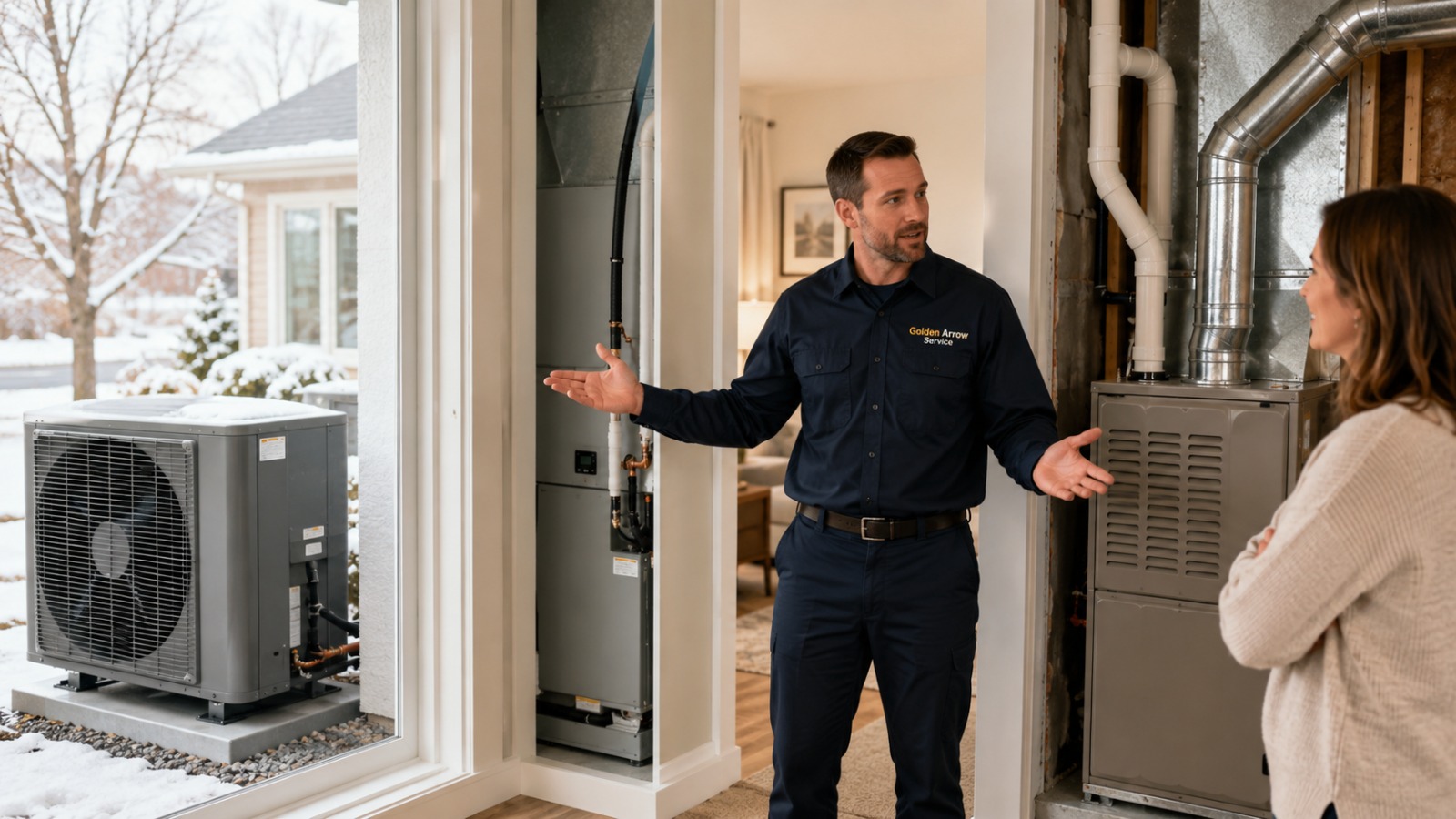

A thermostat making HVAC system work harder when it reads the wrong temperature, sends poor signals, or does not match your furnace, air conditioner, or heat pump setup.
In Northern Virginia homes, that can lead to longer run times, uneven rooms, higher energy bills, and extra wear on your HVAC equipment.
Key Takeaways
- A thermostat controls when your HVAC system heats, cools, and stops.
- Wrong readings, poor location, wiring issues, or bad scheduling can waste energy.
- Heat pump thermostat setup matters because AUX heat can raise winter electric use.
- Northern Virginia homes with humidity, older ductwork, and multi-level layouts can feel thermostat problems faster.
- Repair may work for newer thermostats with simple wiring or sensor issues.
- Replacement is often better for old, inaccurate, non-programmable, or incompatible thermostats.
Were: Can a Thermostat Make Your HVAC System Work Harder?
Yes. A thermostat can make your HVAC system work harder when it reads the wrong temperature, sends delayed signals, sits in a poor location, or does not match your furnace, air conditioner, or heat pump setup. That can lead to longer cycles, short cycling, wasted energy, and uneven comfort.
Why Your Thermostat Controls More Than Temperature
Your thermostat is the control point for your HVAC system. It reads indoor temperature, compares it to your setting, and tells the system when to run.
When that reading is accurate, your home stays comfortable without extra energy use. When the reading is wrong, your furnace, air conditioner, or heat pump may respond to the wrong signal.
For example, a thermostat near direct sunlight may think the house is warmer than it really is. A thermostat near a drafty door may keep the heating system running longer than needed.
That is why thermostat accuracy affects comfort, energy consumption, utility bills, and HVAC wear.
Warning Signs Your Thermostat Is Hurting HVAC Efficiency
| Warning Sign | What It Often Means |
| HVAC runs too long | Poor reading, bad location, or control issue |
| System turns on and off fast | Short cycling or wiring problem |
| Energy bills rise | Bad schedule or extra run time |
| Rooms feel uneven | Thermostat location, ductwork, or airflow issue |
| Reading feels inaccurate | Sensor, calibration, or placement problem |
Your HVAC Runs Longer Than Normal
If your system keeps running after the home feels comfortable, the thermostat may not be reading the space correctly.
This can increase energy use and place extra strain on the HVAC equipment.
Your System Turns On and Off Too Often
Short cycling means the system starts and stops too quickly.
A thermostat can cause this, but so can a dirty filter, airflow restriction, refrigerant issue, or oversized system.
Your Energy Bills Rise Without a Clear Reason
If your routine has not changed but bills keep rising, check the thermostat setup.
Sometimes the fix is simple, like adjusting the schedule. Other times, old wiring or an outdated thermostat may be the reason.
Some Rooms Feel Too Hot or Too Cold
Uneven comfort is common in Northern Virginia townhomes, split-level homes, and older houses.
If the thermostat sits on one level, bedrooms, basements, or sun-facing rooms may not match the set temperature.
The Thermostat Reading Does Not Match the Room
Place a separate indoor thermometer near the thermostat.
If the readings stay different, the thermostat may need calibration, relocation, repair, or replacement.
Common Thermostat Problems That Waste Energy
Poor Thermostat Location Creates False Readings
A thermostat should read the main living space. It should not sit near heat, drafts, sunlight, or supply air.
Bad locations include:
- Near exterior doors
- Beside sunny windows
- Close to supply vents
- In kitchens or laundry rooms
- On poorly insulated walls
- Near lamps, TVs, or appliances
In older Arlington and Alexandria homes, thick walls, additions, and narrow hallways can make location problems worse.
Old Thermostat, Weak Power, or Wiring Problems
Age, dust, weak batteries, loose wiring, and moisture can affect thermostat performance.
Common signs include a blank screen, delayed response, random setting changes, Wi-Fi drops, or frequent resets.
Smart thermostats may also need a C-wire for steady power. Without it, the device may reboot, lose connection, or fail to control the system correctly.
Wrong Schedule or Constant Manual Adjustments
A programmable thermostat only helps when the schedule matches your real routine.
If the schedule is outdated, your HVAC system may run when no one is home. Constant manual changes can also make the system chase temperature changes all day.
Energy.gov notes that programmable thermostats can help automate temperature setbacks when you are asleep or away.
Heat Pump Thermostat Setup Issues
Heat pump thermostats need correct staging.
If setup is wrong, AUX heat may run too often. That can raise electric use during cold Northern Virginia nights.
Thermostat Repair vs Replacement
Not every thermostat issue means you need a new one. Some problems can be fixed with batteries, settings, wiring repair, relocation, or heat pump setup correction.
Repair may make sense if the thermostat is newer and the issue is simple. Replacement usually makes more sense when the thermostat is old, inaccurate, non-programmable, or not compatible with the HVAC system.
| Situation | Better Direction |
| Weak batteries | Simple fix |
| Wrong schedule | Reprogram |
| Loose wiring | Technician repair |
| Bad location | Relocation |
| Old manual thermostat | Replacement |
| Repeated inaccurate readings | Replacement may be better |
| Smart thermostat keeps rebooting | Wiring check or replacement |
| Heat pump staging is wrong | Setup correction |
Golden Arrow works with major thermostat brands, including Nest, Ecobee, Honeywell, Sensi, Carrier, Trane, and Lennox.
Thermostat Repair vs Replacement Cost
Thermostat cost depends on the device, wiring, C-wire needs, heat pump compatibility, and setup time.
Golden Arrow’s thermostat page lists standard thermostat installation at $150 to $300, smart thermostat installation at $250 to $450 including the device, and C-wire installation adding $100 to $200 if missing.
| Cost Factor | Why It Matters |
| Basic vs smart thermostat | Smart models need more setup |
| C-wire need | Some homes need wiring updates |
| Heat pump compatibility | AUX heat and staging must be correct |
| Thermostat relocation | Moving the device adds labor |
| System testing | Heating and cooling should be checked after install |
A cheaper thermostat is not always the best fix if your system needs smart control, zoning, heat pump wiring, or better compatibility.
Thermostat Mistakes That Make HVAC Systems Work Harder
| Mistake | HVAC Impact |
| Setting AC too low | Longer AC run time |
| Changing settings all day | Unstable cycles |
| Ignoring humidity | Comfort feels worse |
| Using an old schedule | Energy wasted |
| Bad thermostat location | False readings |
| Skipping filter changes | Poor airflow |
| Ignoring AUX heat | Higher winter electric use |
A thermostat works best when the full HVAC system is healthy.
Clean filters, open vents, steady airflow, and regular maintenance all help the thermostat control comfort more accurately.
When It Is Not the Thermostat
Sometimes the thermostat looks like the problem, but another HVAC issue is causing the symptom.
| Symptom | Possible Thermostat Cause | Other Possible Cause |
| AC runs too long | Wrong setting or bad reading | Low refrigerant, dirty coil, weak airflow |
| Rooms feel uneven | Poor thermostat location | Leaky ducts or weak return air |
| Short cycling | Wiring or signal issue | Dirty filter or oversized system |
| Heat feels weak | Wrong mode or setting | Furnace, heat pump, duct, or insulation issue |
| High energy bills | Bad schedule | Humidity, air leaks, or old equipment |
Good troubleshooting checks both the thermostat and the full HVAC system.
Why Northern Virginia Homes Feel Thermostat Problems Faster
Northern Virginia weather puts real pressure on heating and cooling systems.
Humid summers can make indoor air feel warmer than the thermostat number. Winter temperature swings can also make heating systems run longer, especially in homes with older insulation.
Home layout matters too.
Alexandria and Arlington homes may have plaster walls, additions, and older duct layouts. Vienna, Fairfax, McLean, and Falls Church homes often have multiple levels with hot and cold spots.
Townhomes can have another issue. The thermostat may sit on the main floor while bedrooms, basements, or sun-facing rooms feel different.
That is why local thermostat service should check more than the device. Wiring, airflow, ductwork, humidity, indoor air quality, and HVAC compatibility all matter.
Smart Thermostat vs Programmable Thermostat
| Thermostat Type | Best For | Main Benefit |
| Manual thermostat | Simple control | Easy operation |
| Programmable thermostat | Fixed routines | Scheduled savings |
| Smart thermostat | Changing routines | App control and learning |
| Heat pump thermostat | Heat pump homes | Correct staging and AUX heat control |
Before upgrading, make sure the thermostat matches your furnace, air conditioner, or heat pump. Compatibility matters more than the brand name alone.
What You Can Safely Check Before Calling a Technician
• Check the mode
Make sure the thermostat is set to heat, cool, or auto.
• Review the set temperature
Avoid extreme settings that force long run times.
• Replace the batteries
Weak batteries can cause strange behavior.
• Compare the reading
Use a separate thermometer near the thermostat.
• Review the schedule
Make sure old programs are not still running.
• Check the air filter
A clogged filter can reduce airflow.
• Look for sunlight or drafts
Doors, windows, vents, and sunlight can affect readings.
• Watch for AUX heat
Frequent AUX heat may mean the heat pump setup needs attention.
• Do not open wiring yourself
Thermostat wiring mistakes can damage HVAC equipment.
When to Call Golden Arrow Service
Call Golden Arrow Service at 703-782-5028 if your thermostat is blank, inaccurate, unresponsive, short cycling your system, or making your HVAC run longer than normal.
Golden Arrow Service helps homeowners in Vienna, Fairfax, Arlington, McLean, Falls Church, and across Northern Virginia with thermostat repair and smart thermostat installation in Northern Virginia.
Their licensed and insured HVAC team can check thermostat wiring, C-wire needs, heat pump settings, airflow, compatibility, and full system performance before recommending repair or replacement.
Golden Arrow Service has 25+ years serving Northern Virginia, same-day service options, licensed Virginia technicians, upfront pricing, and 24/7 emergency availability.
FAQs about Thermostat making your HVAC system
Q1: Can bad thermostat wiring damage my HVAC system?
Yes. Incorrect wiring can cause short cycling, failed calls for heating or cooling, AUX heat problems, or equipment communication issues. A technician should handle wiring changes.
Q2: Can a smart thermostat work with an older furnace?
Often yes, but compatibility must be checked. Older systems may need a C-wire, adapter, or a thermostat designed for that equipment.
Q3: Should I move my thermostat to another wall?
Only if the current location causes false readings. Moving a thermostat requires wiring work and should be planned around airflow, sunlight, doors, and room use.
Q4: Why does upstairs feel different from the thermostat reading?
The thermostat may be reading the main level while upstairs gains heat from sunlight, poor return air, or attic temperature. This is common in multi-level Northern Virginia homes.
Q5: Can humidity make my thermostat setting feel wrong?
Yes. High humidity can make a room feel warmer even when the thermostat number looks normal. Dehumidification, airflow, and AC runtime all matter.
Q6: Is a thermostat issue an emergency?
It can be urgent if the system will not turn on during extreme heat or cold, the thermostat is unresponsive, or wiring issues are causing unsafe operation.